Table of Contents (17 sections)Show ↓
Is SEO Dead in 2026? No, It Has Evolved
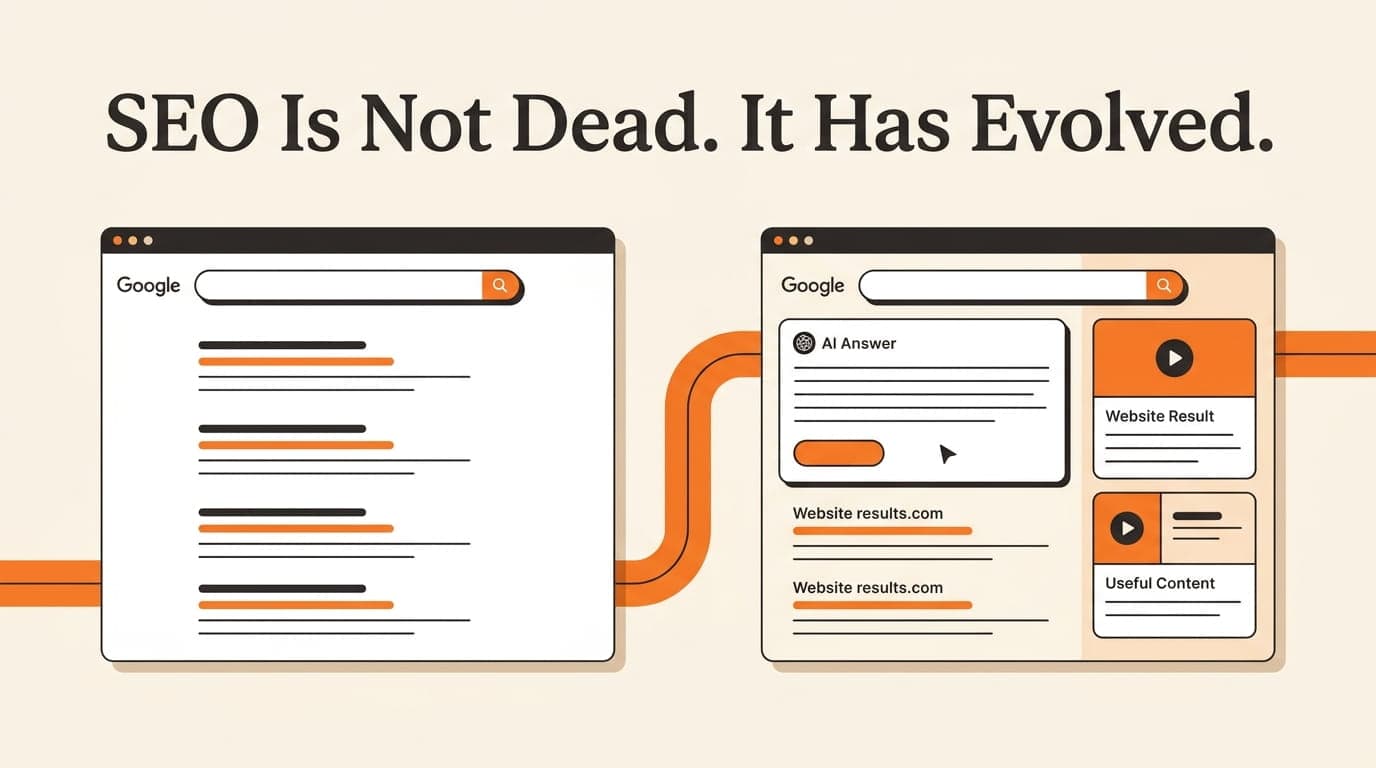
If you’re seeing AI answers appearing at the top of search results, it’s a fair question to ask if your SEO efforts are worth it. Whilst SEO is changing, Google confirms that traditional SEO techniques still work to improve your visibility. By providing useful solutions to real problems, useful content, and making sure your site is easy to access, you can still compete in search.
This guide will help you understand the changes, what still works, and how our 8 SEO Tools can help you improve.
Why People Think SEO is Dead?
People often get confused about SEO and think there is a set formula. Repeating keywords, writing generic articles, and chasing scores will never give you a solid SEO foundation.
Whilst there are new ways to search using AI Overviews and AI Mode, you still need useful and easy to find content. Google confirms that your pages need to be indexed and eligible to be included in search snippets. This means your site needs to be easy to access and contain useful content.
The real changes are that you need to optimise for the person behind the search, rather than just the search position.
What Modern SEO Needs?
Answer The Search Intent
Understand what your audience wants to achieve. If someone is searching for SEO information, they want to understand what it is. If they’re searching for a website audit, they want actionable items.
Answer the main question and build around it. Use related questions, examples, and clear next steps. Use relevant keywords throughout your content.

Useful Content
Provide value to your audience. Whether it’s sharing your insights, explaining your process, showing solutions, or providing evidence for your recommendations.
Google recommends providing unique content to help both traditional and AI searches. Keep your content clear and use examples to help improve.
Easy To Access
No matter how well written your content is, if it can’t be searched by search engines, then it won’t help. Make sure your site can be crawled, has internal links, can be indexed, and contains important information in text.
Keep your site easy to navigate, and prioritise a good mobile experience. Google includes these as best practices for AI searches.
How Our SEO Tools Help
Our tools help you with the following. Use them to find opportunities to improve and then review the results to make changes.

Free Meta Title & Description Checker
Use our Free Meta Title & Description Checker to review your search snippet. Make sure your title is specific and matches what the page promises. Use a description that explains what value the page provides.
Keep your title and description short. Google will cut titles and descriptions depending on the space available.
Website SEO & Speed Checker
Use our Website SEO & Speed Checker to start reviewing your site. This will help you understand how your SEO is performing, if your meta tags are correct, whether your headings are set up correctly, and how fast your site is.
Focus on issues that are stopping your site from being found or reducing the experience.
Heading Tag Analyzer
Use our Heading Tag Analyzer to check your headings. Make sure your main heading is clear, your main topics are grouped under descriptive subheadings, and smaller sections are introduced.
Headings should help your audience understand the page. Don’t try to include keywords in your headings if it makes the heading awkward or repetitive.
Schema Markup Generator
Use our Schema Markup Generator to create JSON-LD structured data for your webpage. Choose schema that accurately reflects what is visible on the page.
Google recommends using JSON-LD if your setup allows. Using relevant structured data can help with being eligible for rich results, but there’s no guarantee.
Schema Markup Validator
Use our Schema Markup Validator to check your schema. Our tools include JSON-LD, Microdata, and Schema.org. Check that your schema is accurate, and the code is valid. Even if your code is valid, it may not be describing the correct content. Google requires your structured data to reflect what is visible on the page.
PageSpeed Performance Audit
Use our PageSpeed Performance Audit to investigate how your site is performing on mobile and desktop. Use the Lighthouse results to improve your site. Once changes have been made, run the audit again.
Remember, this is a test in a lab. Google uses Core Web Vitals to measure how fast your page loads, how responsive it is, and how visually stable it is. Use Search Console to review your results.
Image Alt Text & Image SEO Checker
Use our Image Alt Text & Image SEO Checker to find any missing or blank alt attributes. Review each issue to understand what needs improving. Don’t automatically fill in every box.
Write natural alt text for meaningful images. Don’t stuff your keywords. Use relevant images to support your content. Keep your images practical for your visitors to load.
Free DA PA Checker
Use our Free DA PA Checker to view your domain authority, page authority, backlinks, and more. Use these as research, not your end goal.
Having a high score on the dashboard doesn’t mean your page has satisfied the searcher. Focus on providing useful content, opportunities, and measurable results.
Improving From Your Findings
Pick a page to focus on. Understand who your audience is, what question it answers, and whether the information is still accurate.

Use the relevant tools to find issues. Prioritise issues that will make a difference. Note down the changes you’ve made. Once search engines and users have had time to react, review how your page is performing.
Focus on measurable results. How many quality enquiries, sales, sign ups or engagement are you getting? Google encourages site owners to think about what value they’re getting from conversions.
Conclusion
SEO isn’t dead in 2026, it’s just evolved. Providing useful content, easy to access, clear structure, and a good user experience will still give you a solid foundation.
Use our tools to find areas to improve. Whilst you can compete for visibility, there’s nothing to guarantee you’ll rank.
