
Table of Contents (19 sections)Show ↓
Quick Summary / Key Takeaways
- Optimal Length: Keep titles between 50–60 characters (or under 580–600 pixels) to avoid getting cut off on search results.
- Front-Load Keywords: Place your main keyword near the beginning for immediate SEO signals and better readability.
- Match Search Intent: Align your title's hook with what the user is actually searching for (informational, commercial, or transactional).
- Standard Structure: [Primary Keyword] - [Secondary Keyword / Modifier] | [Brand Name]
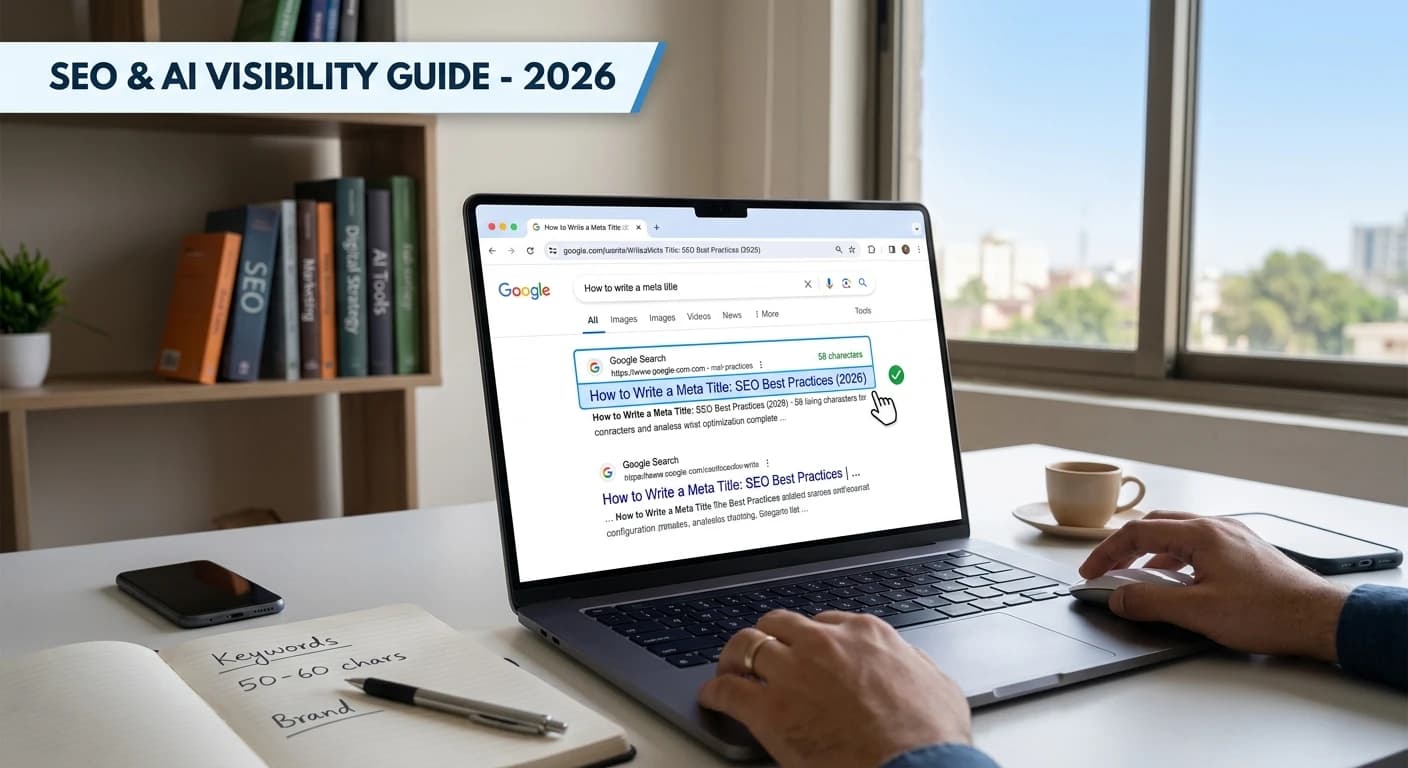
A meta title is the first thing a searcher sees before they ever visit a web page, and it often single-handedly decides whether they click your link or scroll past to a competitor.
Learning how to Check Meta Title Length and how to write a meta title SEO experts recommend is not about stuffing keywords into a sentence it is about balancing clarity, relevance, and copywriting in a single line of text. In this comprehensive guide, you will learn a simple step-by-step process, copy-paste formulas, and key mistakes to avoid so your pages rank higher on Google and earn more clicks.
1. What Is a Meta Title and Why Does It Matter?
A meta title (often called a title tag) is an HTML element that defines the official title of a web page. It appears as the clickable headline in search engine result pages (SERPs), browser tabs, and social media preview links.
<title>How to Write a Meta Title: SEO Best Practices | SearchPro</title>
1.1 How Meta Titles Impact Search Rankings
Search engines scan your title tag to quickly understand the primary topic of your page. Including your main target keyword in the title tag helps search algorithms match your page with relevant user search queries.
1.2 How Meta Titles Impact Click-Through Rate (CTR)
Even if a page reaches the top 3 spots on Google, an unappealing or generic title will lose traffic to lower-ranked pages. A clear, benefit-driven title acts as digital advertising copy that convinces the user to click.
2. Step-by-Step Process to Write an SEO-Friendly Meta Title
Writing an effective meta title requires following a structured process that satisfies both search engines and human readers.
Step 1: Front-Load Your Primary Keyword
Search engines and readers both scan content from left to right. Placing your primary target keyword at or near the beginning signals topical relevance instantly.
- Good: Meta Title SEO Guide: How to Write Titles That Rank
- Avoid: Learn Everything About Online Content Optimization and How to Write a Meta Title SEO
Step 2: Keep It Within Character and Pixel Limits
Google cuts off titles that are too wide, replacing the trailing text with an ellipsis (...).
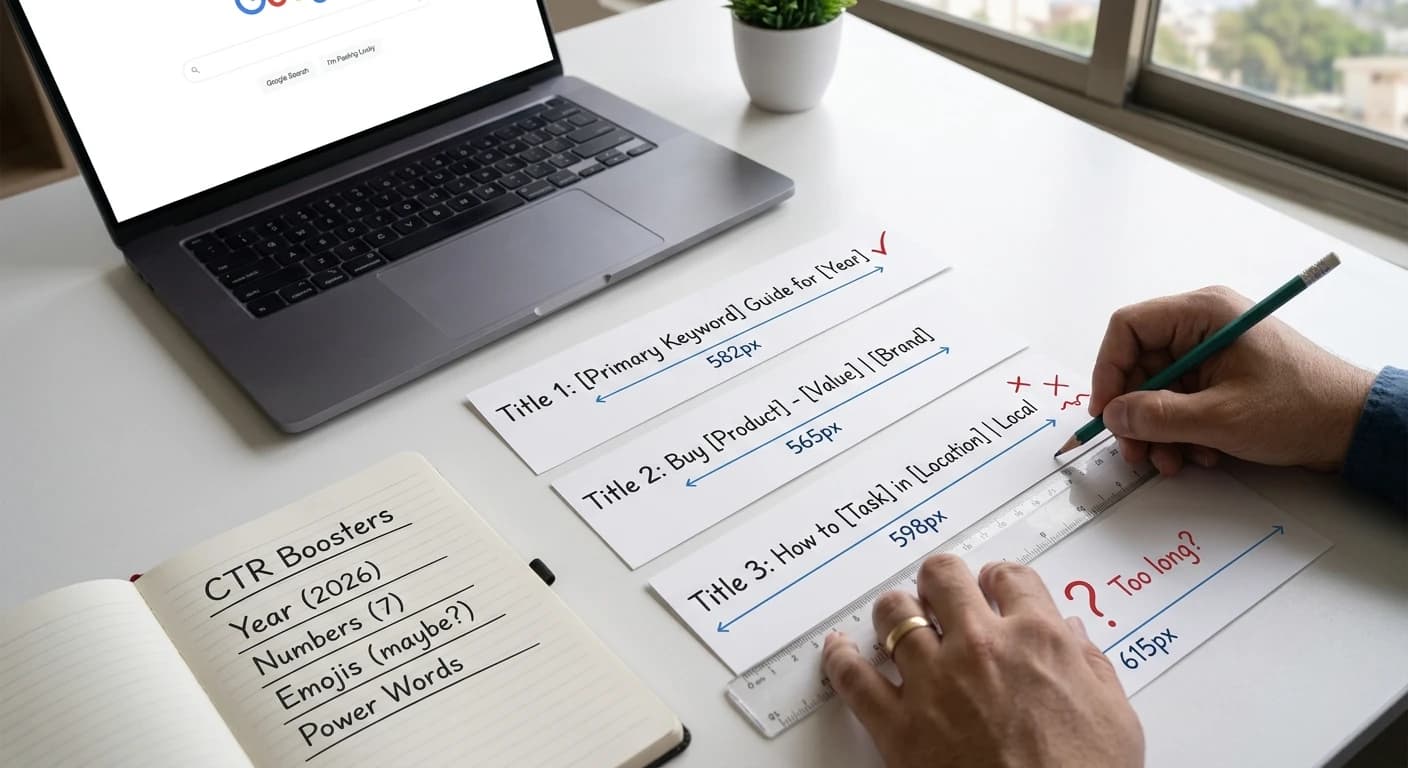
- Character Limit: Aim for 50 to 60 characters.
- Pixel Limit: Keep text under 580–600 pixels (wider letters like 'W' or 'M' take up more pixel space than 'I' or 'L').
Step 3: Match the User's Search Intent
Identify what the searcher wants to accomplish:
- Informational Queries: Use modifiers like How to, Guide, Tips, Ways, Examples.
- Commercial Queries: Use modifiers like Best, Review, Comparison, Top.
- Transactional Queries: Use action words like Buy, Order, Discount, Pricing.
Step 4: Add a Unique Angle or Modifier
Differentiate your title from competing search results by adding specific hooks:
- Add the current year (2026)
- Use numbers (7 Easy Steps)
- Highlight key benefits (Boost Your CTR)
Step 5: Avoid Duplicate Titles Across Pages
Every single URL on your website needs a unique meta title. Duplicate titles confuse search crawlers about which page to rank and split your click data across multiple links.
Step 6: Write for Humans First, Algorithms Second
Never sacrifice natural readability for keyword placement. A natural, readable title will always achieve a better CTR and lower bounce rate than a stiff, keyword-stuffed phrase.
3. Proven Meta Title Formulas & Examples
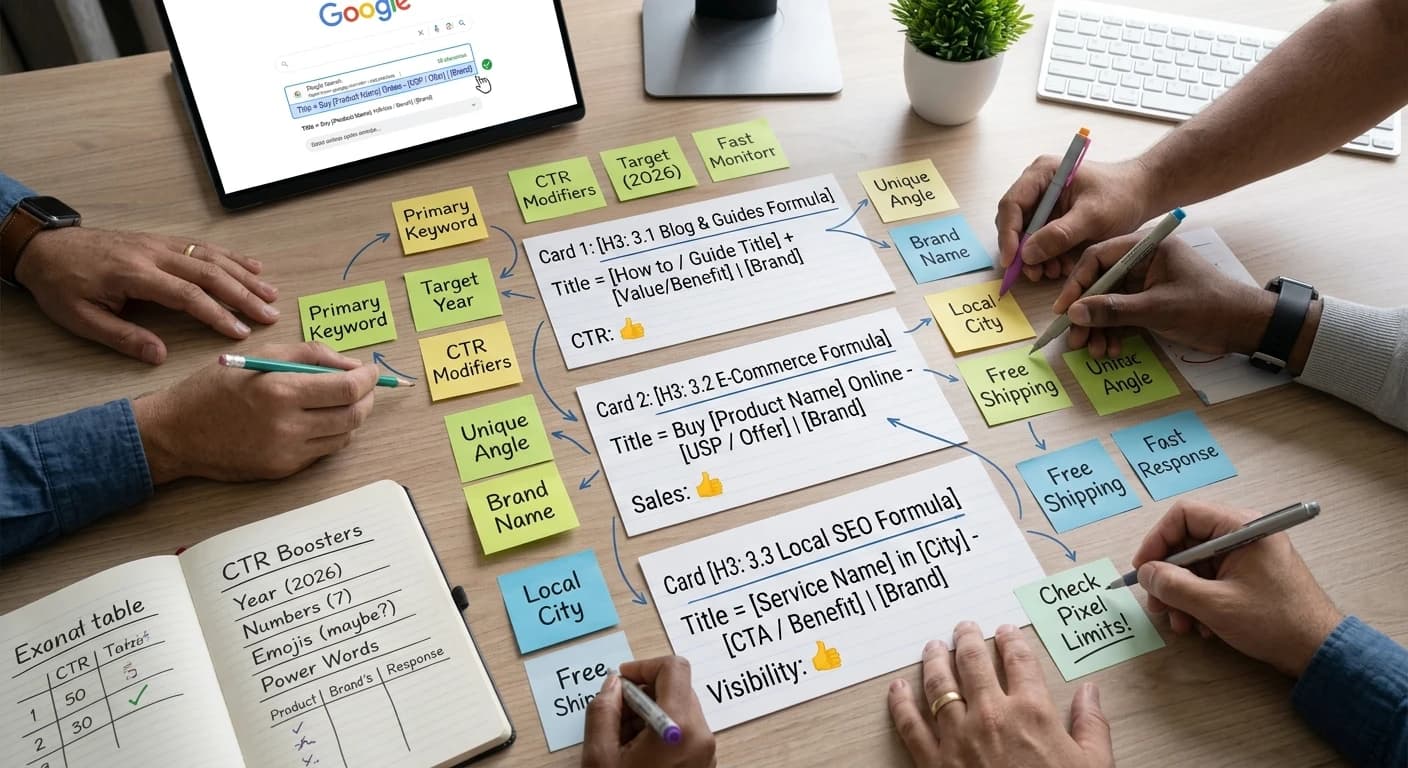
You can use these field-tested templates to quickly generate optimized meta titles for different types of pages on your site:
3.1 Blog Posts & Educational Content
Formula: [How to / Guide Title] + [Value or Benefit] | [Brand]
Example: How to Write a Meta Title: 7-Step SEO Guide | SearchPro
3.2 E-Commerce & Product Pages
Formula: Buy [Product Name] Online - [USP or Special Offer] | [Brand]
Example: Buy Wireless Headphones - Free Shipping & 20% Off | TechStore
3.3 Local SEO & Service Pages
Formula: [Service Name] in [City] - [CTA or Key Value] | [Brand]
Example: Emergency Plumber in Austin - 24/7 Fast Response | QuickFix
4. Meta Title Best Practices: Do's vs. Don'ts
| Feature | Recommended Practice (DO) | Poor Practice (DON'T) |
|---|---|---|
| Length | 50–60 Characters (Max 580px) | > 70 Characters (Gets cut off with ...) |
| Keywords | 1 Primary Keyword placed naturally | Keyword Stuffing (Meta Title, SEO Title, Write Title) |
| Branding | Place Brand Name at the end (| Brand) | Brand Name at the very start (unless globally famous) |
| Formatting | Title Case or Sentence Case | ALL CAPS or all lowercase text |

5. Common Meta Title Mistakes to Avoid
- Keyword Stuffing: Repeating the same word multiple times looks spammy, lowers user trust, and can lead to search ranking penalties.
- Vague or Generic Titles: Using generic labels like "Home" or "Blog Post" provides zero contextual value to search crawlers.
- Ignoring Brand Placement: Leaving off your brand name misses an opportunity to build long-term trust and domain awareness.
- Relying Solely on CMS Auto-Generation: Default automated settings in platforms like WordPress or Shopify often result in overly long or awkwardly formatted titles if left unedited.
6. Top Free Tools to Test and Preview Meta Titles
- To the Web SERP Preview Tool: Visualizes your title's exact pixel width and checks how it looks on both mobile and desktop screens.
- Yoast / Rank Math SEO Plugins: Provides real-time character count feedback and SERP previews directly within WordPress.
- Screaming Frog SEO Spider: Crawls your entire website to identify missing, duplicated, or truncated title tags across all URLs.